Most of my clients don’t walk in saying they want to tear their house down. They walk in saying something like, “We’ve had three contractors tell us it would cost almost as much to fix this house as it would to start over.” That conversation is usually the turning point.
I have been guiding homeowners and investors through this decision for over 25 years, across San Francisco and Marin County. The answer is never obvious from the outside.
A teardown and rebuild house project is a significant commitment, and it is not the right move for every property. But when the existing structure is genuinely compromised, starting fresh can be the clearest path to the home you actually want, on a site you already know.
I wrote a companion piece on this topic earlier, Remodeling vs Rebuilding: How to Decide, which compares both paths side by side.
This article goes deeper into the teardown and rebuild path, specifically:
- What triggers it,
- How the approval process works in San Francisco, and
- What changes when you commit to starting from the ground up?
When a Teardown Becomes the Better Path
What I have seen over time is that the decision to tear down and rebuild a house tends to become clear once you compare what it takes to fix the existing structure against what you could build in its place.
In San Francisco and Marin, a lot of the housing stock dates from the 1950s through the 1970s. Some of those homes were well built for their era, but the structural systems, the framing, the foundations, the seismic detailing, were designed for a different set of standards.
When a homeowner comes to me with a house that has a failing foundation, outdated framing, and a layout that requires a chain of workarounds just to function, the remodel path starts to look like a series of compromises stacked on top of each other.
The patterns I see most often are:
- Structural systems that have degraded to the point where a remodel means replacing them anyway, which raises the question of what the existing structure is actually contributing.
- Layouts so fragmented that a remodel becomes an exercise in designing around problems rather than solving them. The floor plan never quite works because it was never designed for how the client lives.
- Properties where the existing home significantly underutilizes the lot. Setback allowances, height limits, and lot coverage calculations might allow a much larger or better-positioned home than what is there now.
- Sites with views, natural light, or outdoor connections that the current home cannot access because of how it sits on the property. A ground-up rebuild in SF lets you orient the entire structure toward the site’s best assets.
- Homes where the seismic, energy, and systems upgrades required for a deep remodel would mean gutting the house to bare framing, at which point the old structure is adding cost without adding value.
One of the things that becomes clear pretty quickly is that a deep remodel on a seriously compromised home does not save as much money as people assume.
When you factor in the unknowns behind the walls, the asbestos, the old wiring, the structural surprises, the budget gap between a remodel and a full rebuild in San Francisco starts to narrow.
What San Francisco’s Approval Process Looks Like for a Ground-Up Rebuild
San Francisco treats a teardown and rebuild house project differently from a remodel. A ground-up rebuild triggers a more involved planning review. That typically includes shadow studies, lot coverage analysis, neighborhood notification, and in many cases a design review hearing. Some neighborhoods carry additional historic or contextual requirements on top of that.
That is a normal part of the process. It is not a reason to avoid the teardown path, but it does mean the approval strategy has to be built into the design from the beginning, not treated as a separate step at the end.
My approach is to start with the zoning research before I start sketching. I meet with planning staff early to understand who reviews the project, what their concerns are likely to be, and where the potential friction points sit. I study shadow impacts and neighbor sightlines and shape the design around what the city will support, while still working to get my client the home they want.
There is a lot of subjectivity in the rules. That is something most homeowners do not realize until they are deep into the process. Setback calculations, massing requirements, and design guidelines all leave room for interpretation. My role is to push the limits of what is possible and find where the bounds can be extended.
I work for my clients. My job is to stand up for what they want and find a way to make it work within the system, through preparation and clear presentation, not through confrontation.
When a Strategic Remodel Achieves the Same Result
Here is a nuance worth understanding. In San Francisco and Marin, I often execute what are technically classified as remodels but are functionally new homes.
Political and neighborhood realities sometimes make a remodel approval path more viable than a formal teardown and rebuild. Existing structures can be strategically reworked, replaced section by section, or reinvented to the point where the result is a completely new home that navigated a smoother approval path.
This is not a workaround. It is a legitimate strategy that comes from understanding how the approval system actually operates. Sometimes the smartest path to a new home is through a strategic remodel rather than a formal demolition, and knowing when to use each approach is part of what I bring to the process.
Cost, Timeline, and What Changes When You Start Fresh
In practice, what I have seen is that clients who go through a teardown and rebuild in San Francisco end up with more predictable budgets and timelines than those who attempt a deep remodel on a seriously compromised structure.
That may sound counterintuitive, since a ground-up rebuild typically costs more upfront. But the cost clarity is real. When everything is new and built to current standards, there are fewer surprises. A remodel on a mid-century home almost always uncovers conditions that add cost and time: old wiring that does not meet code, asbestos that requires abatement, framing that does not support the loads you need.
A full rebuild in San Francisco also changes the design equation. You are no longer working around an existing footprint. You can orient the home to maximize views and natural light. You can integrate modern seismic and energy systems from the start. You can design the layout you actually want rather than adapting what is already there.
On the timeline side, a teardown and rebuild house project in San Francisco will take longer in the approval phase than a straightforward remodel, because the planning review is more involved. But once approved, construction tends to move on a more predictable schedule. Remodels often stall when contractors open up walls and find conditions that require redesign. A ground-up build avoids that cycle.
For investors and developers, the math tends to be straightforward. A tear down rebuild in Marin or San Francisco on a property that is significantly underbuilt allows you to maximize buildable area, deliver a product that meets current market expectations, and price the construction accurately from the start because the plans are complete and the conditions are known.
Real Projects Where the Teardown Path Made Sense
Urban Condos, San Francisco
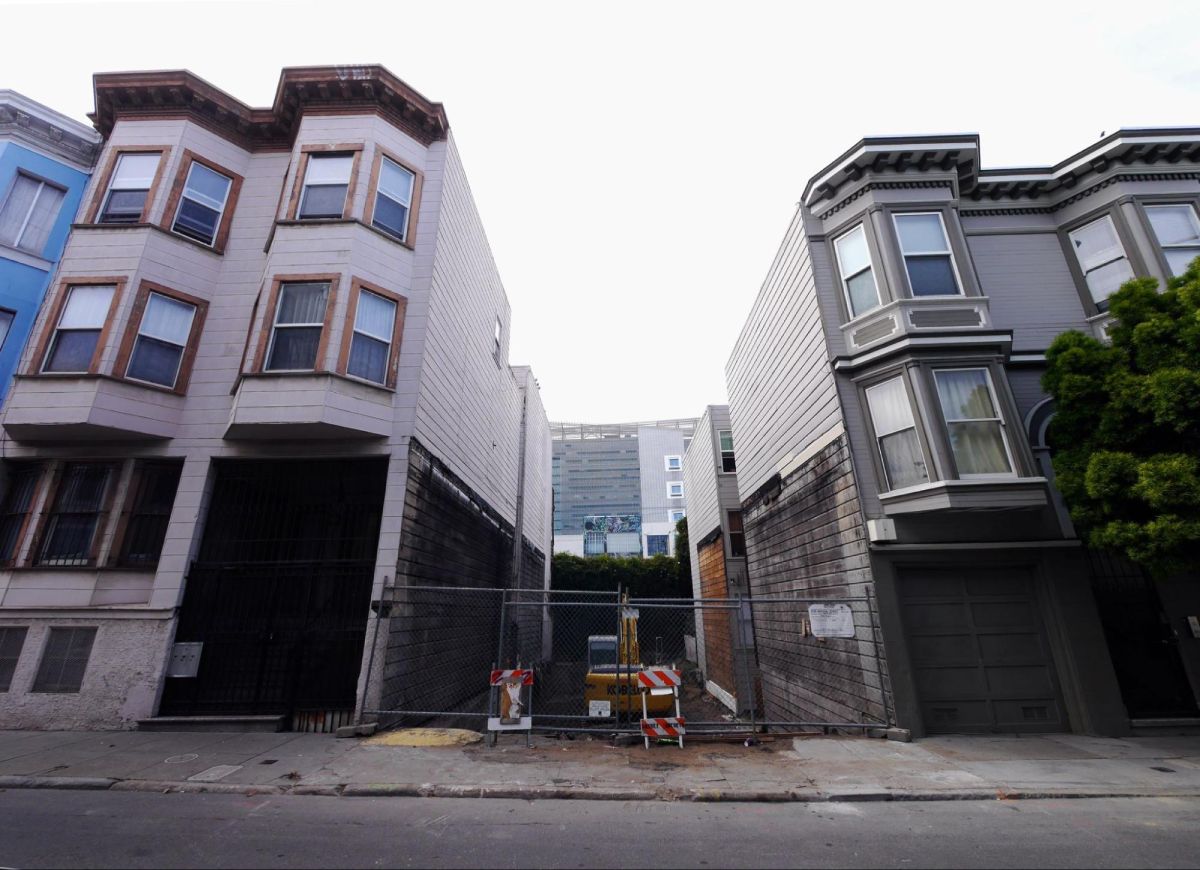
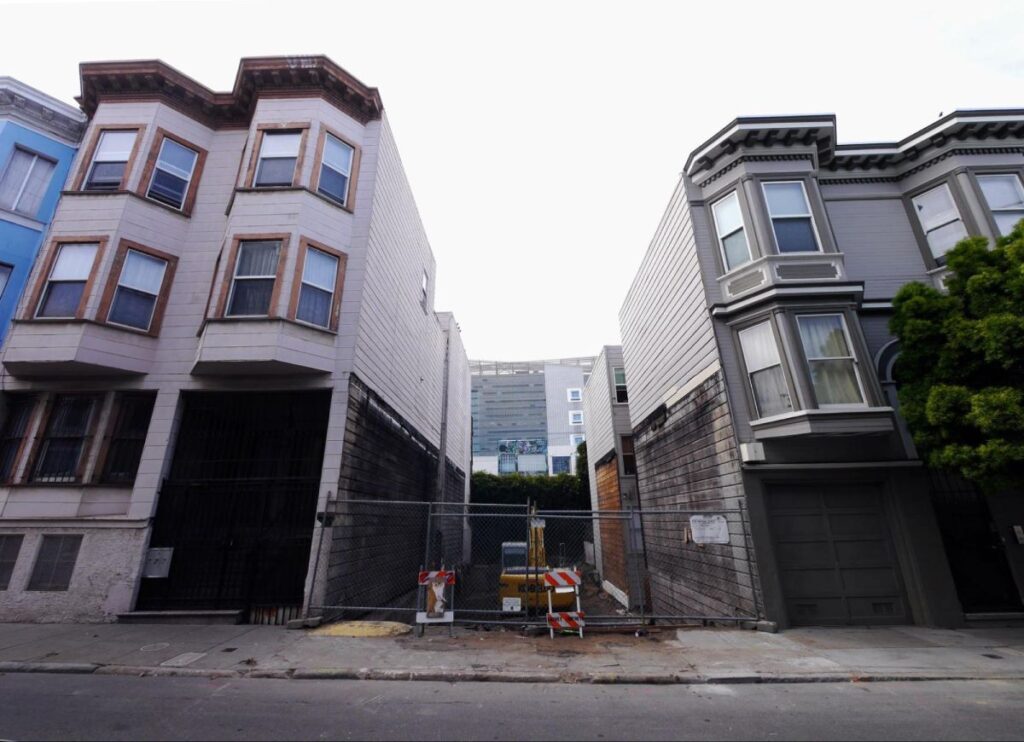
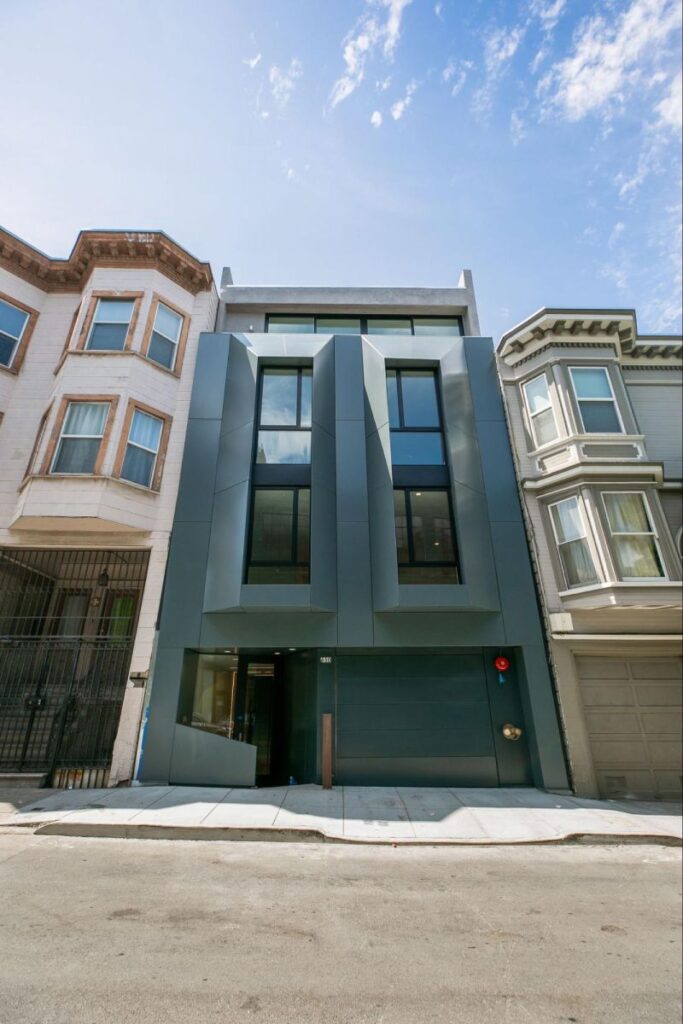
This was a ground-up design and build, replacing a small, single-story industrial space in South of Market. The original structure was underutilizing the property, and the owner wanted to capitalize on the housing demand in the area. Our task was to maximize the buildable area, streamline the review process, and deliver a result our client could be proud of.
We spent hours studying similar projects throughout the area, then worked through dozens of schematic layout diagrams to find the configuration that maximized floor area, improved access to outdoor space, and aligned with city building and planning requirements.
We also reimagined the traditional double bay window in a modern form, blending traditional massing with industrial materials. The planning department agreed with the approach and allowed us to proceed without a formal design review, saving valuable time and money while preserving the client’s vision.
This is the investor angle in practice: creative use of the codes to maximize buildable area and get a ground-up rebuild SF project through approvals efficiently.
Tiburon Modern
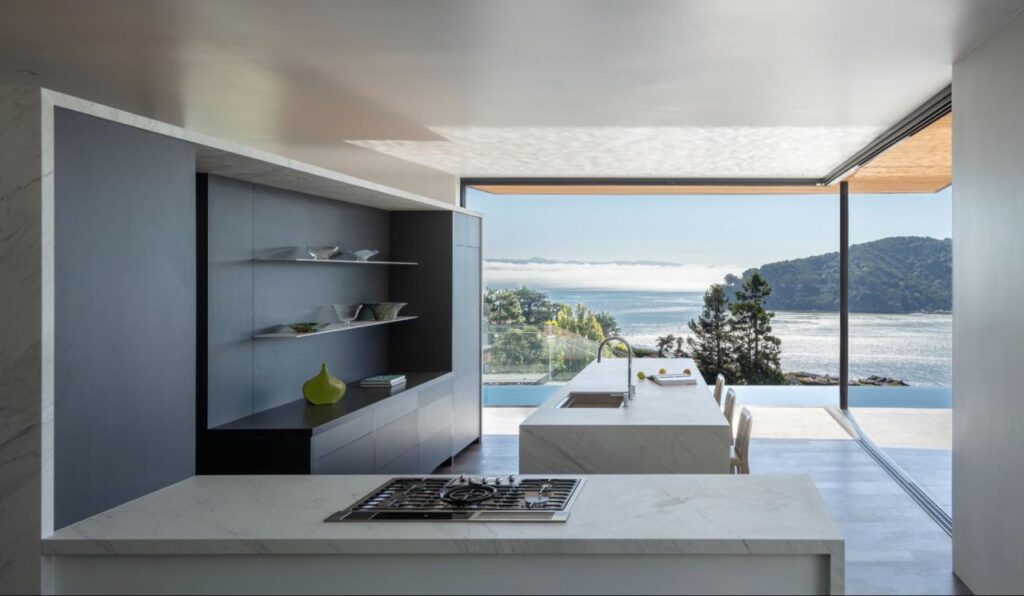
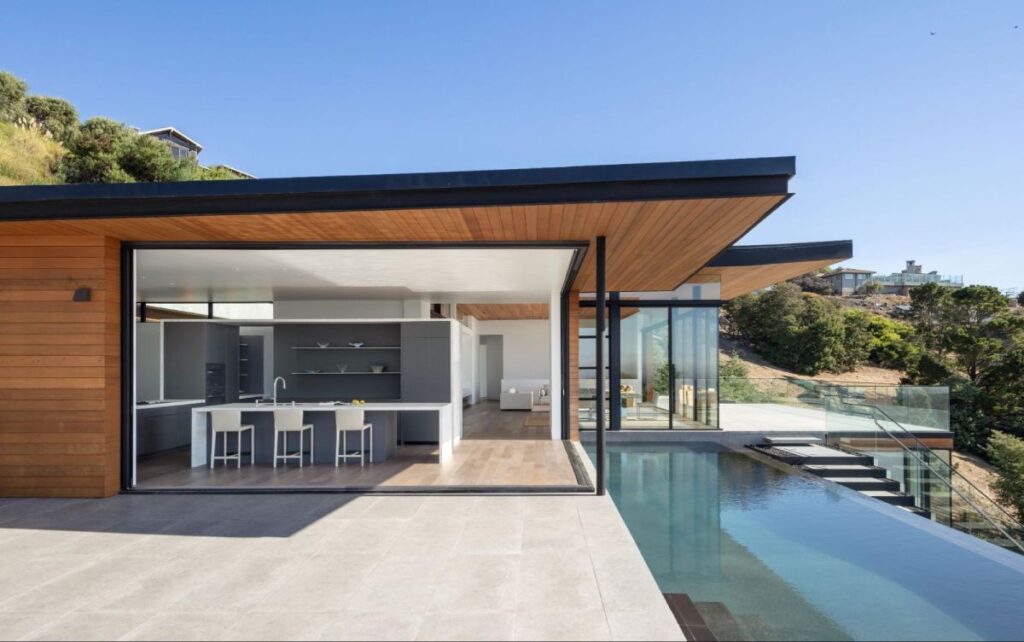
An undeveloped one-acre upslope parcel that multiple development teams had walked away from because they could not solve the access problem. We developed a driveway approach that worked with the existing terrain and allowed us to place the garage, living area, and primary suite all on one level with Golden Gate Bridge and San Francisco Bay views.
The Design Review Board initially pushed back, but over several meetings we carefully demonstrated that the home met the guidelines and had no negative impacts on neighbors. The result was a unanimous approval. The home sold for $11.8 million. I wrote about this project in more detail in the Tiburon Architect article.
How I Help Clients Decide
I do not push clients toward a teardown or a remodel. The decision has to come from the property itself, the client’s goals, and the realities of the approval process. My role is to lay out the options clearly so the decision is informed.
The process starts with a feasibility study. I look at the existing structure, research the zoning, model what a remodel would require versus what a rebuild would allow, and present the comparison honestly. For clients considering a demolish and rebuild in San Francisco, I want them to see the full picture before committing: the approval timeline, the cost range, the design possibilities, and the trade-offs.
My construction sets run 50 to 60 pages, which is four to five times the industry standard. That level of detail means the plans are clear enough for the city to review efficiently and complete enough for contractors to price and build from without guesswork. In over 25 years, I have never had a project denied in San Francisco or Marin. That record is not about luck. It comes from understanding the approval process well enough to anticipate what reviewers and neighbors will ask before the hearing happens.
When a teardown and rebuild house project is the right path, it is an opportunity. You get to build exactly the home you want, on a site you already know, designed around the views, the light, and the way you actually live. The process mastery, the permitting strategy, the detailed construction documents, all of it exists in service of that design.
I design homes that my clients are proud of, and I know how to get them approved and built.
Ready to Talk It Through?
If you own a property in San Francisco or Marin and you are weighing whether to remodel or start fresh, I am happy to help you think it through. Schedule a consultation, and we can look at your site, your structure, and your goals together.
Schedule a consultation with Scott.
Frequently Asked Questions
How long does the approval process take for a ground-up rebuild in San Francisco?
It depends on the neighborhood and the complexity of the site, but a full rebuild San Francisco home approval typically takes six to twelve months through planning. I build the approval strategy into the design from the start, which keeps the timeline as short as the process allows.
Does a teardown and rebuild cost more than a deep remodel?
A ground-up rebuild usually costs more upfront, but it provides better cost clarity because everything is new and built to current standards. Deep remodels on compromised structures tend to uncover hidden conditions that add cost and time, so the final numbers are often closer than people expect.
What triggers the decision to tear down rather than remodel?
The decision usually becomes clear when the cost to fix the existing structure approaches the cost of starting fresh, and the remodel path still leaves you with compromises in layout, systems, or how the home sits on the site. When the structure is not adding value, keeping it does not make financial or design sense.
Are there neighborhoods in San Francisco where teardowns face more resistance?
Some neighborhoods have stronger historic or contextual review requirements, and certain areas are more politically sensitive around demolitions. That is part of why I research the zoning and meet with planning staff early. In some cases, a strategic remodel achieves the same result as a teardown with a smoother approval path.
What does a feasibility study include?
I evaluate the existing structure, research the zoning and code constraints, model what a remodel would require versus what a tear down rebuild in Marin or San Francisco would allow, and present the comparison. The goal is to give you a clear picture of both paths so the decision is grounded in real data, not assumptions.