Some of my Tiburon clients start with a version of the same question: “We found a property with incredible views, but nobody can tell us what we can actually build on it.”
That makes sense. Tiburon sits on some of the most desirable hillside terrain in the Bay Area, with views stretching from the Golden Gate Bridge across San Francisco to the East Bay. But the same topography that creates those views also creates a specific set of design and approval conditions that shape every project here.
I have been working as a Tiburon architect for over 25 years. In that time, I have designed and permitted homes on sites that other firms walked away from. I have never had a project denied in Tiburon, Marin County, or San Francisco. That record is not based on playing it safe. It comes from understanding how the design review process actually works here, and preparing for it from the very first sketch.
For homeowners looking for a Tiburon architecture firm with that kind of track record, this article explains how I work and why preparation makes the difference.
What Makes Tiburon Different for Residential Architecture
Tiburon has a character that is distinct from other parts of Marin County. The town sits on a peninsula with water on three sides, which means views are everywhere, but so are the conditions that come with exposed, sloping terrain.
Narrow roads, limited staging areas, and close proximity to neighboring homes are normal here. For any architect in Tiburon, these are not obstacles so much as planning conditions that need to be addressed early.
Hillside Sites and Access
In my experience, the single biggest factor on a Tiburon hillside lot is access. How do you get cars up to the house? Where do contractors stage during construction? How does a fire truck turn around? These questions shape the project before any design conversation begins.
A related condition is the one-level living premium. On a hillside, getting the garage, the main living spaces, and the primary suite all on the same floor is rare, and it changes the entire experience of a home. In Tiburon’s market, that kind of layout is extremely valuable.
But achieving it requires working with the terrain rather than against it, and that starts with understanding the grade, the setbacks, and the right-of-way conditions before putting anything on paper.
View Corridors and Neighbor Considerations
Tiburon’s views are a big part of why people buy here. Golden Gate Bridge, Raccoon Straits, the San Francisco skyline, Angel Island. The design review process pays close attention to how a new home or remodel affects those views for neighboring properties and from public vantage points.
What I have seen over time is that most view-related objections can be resolved before they become formal concerns. I photograph sightlines from adjacent properties early in the process.
I study how the massing and roofline of a proposed design intersect with what neighbors see from their own windows. When I can walk into a design review meeting with that information already prepared, the conversation tends to be straightforward.
How Design Review Actually Works in Tiburon
Tiburon has a design review process that is thorough, sometimes layered, and shaped by specific guidelines around massing, height, materials, and neighborhood compatibility. For someone unfamiliar with it, the process can seem unpredictable. In practice, it tends to reward preparation.
When I take on a project in Tiburon, the first thing I do is research the site, the zoning constraints, and the design review guidelines that apply. Before I draw anything, I want to understand who the stakeholders are. Which neighbors are likely to have concerns? What has the Design Review Board focused on in recent projects nearby? What are the planning staff’s priorities for this part of town?
My role is to resolve these questions early, while there is still flexibility in the design. I meet with the planning staff before submitting. I walk the neighboring properties. I build the responses to likely objections directly into the plans, so that by the time the project reaches the hearing, the story is already clear and complete.
One of the things that becomes clear pretty quickly is that design review boards respond to clarity. When a set of drawings is thorough, when the narrative makes sense, and when neighbor concerns have already been considered, the process tends to move more smoothly.
That is not luck. It is how I prepare every project, and it is what separates a Tiburon architect who knows this process from one who is learning it for the first time.
A Tiburon Project That Other Teams Walked Away From
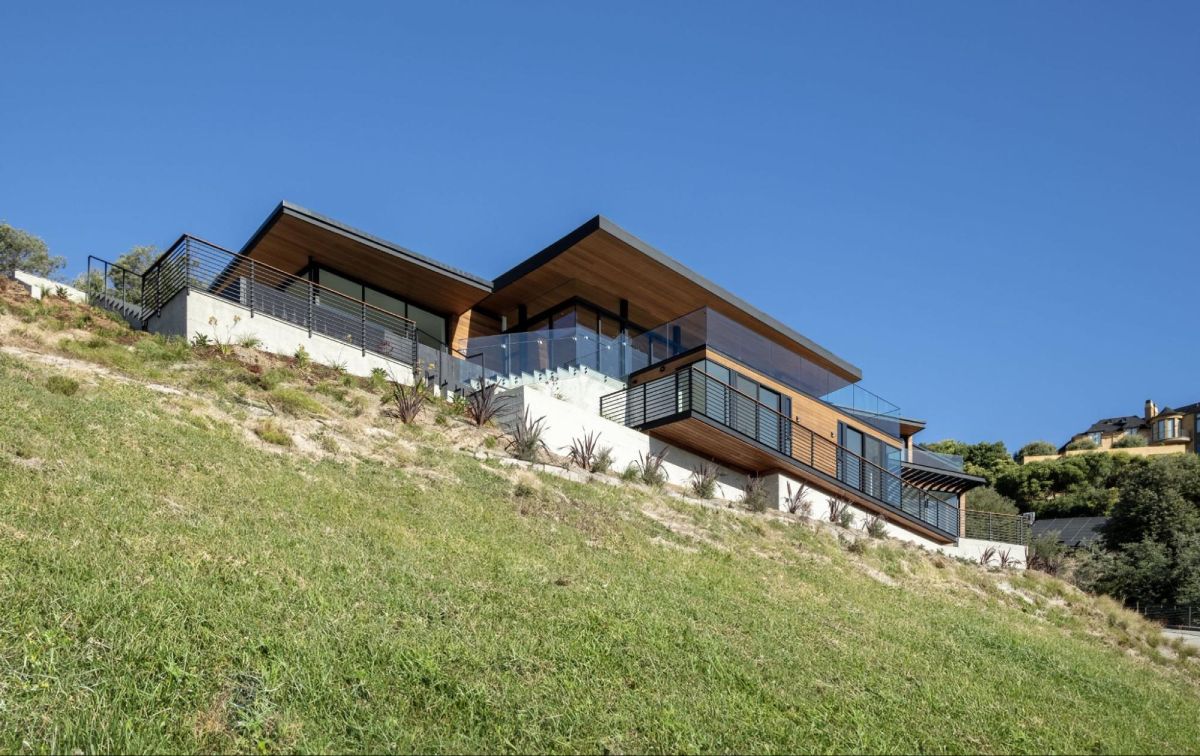
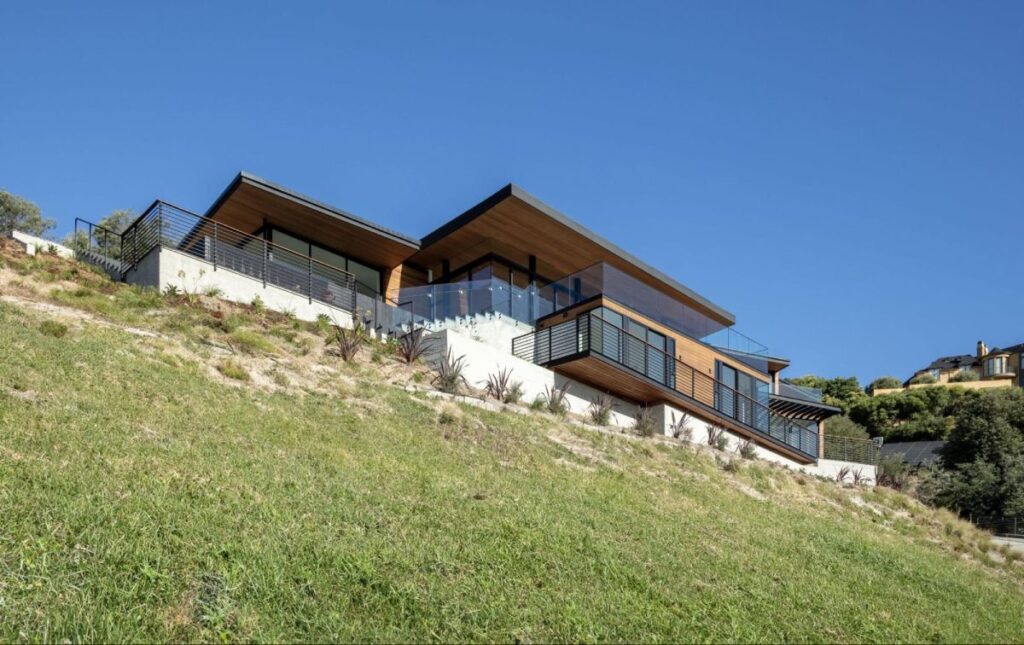
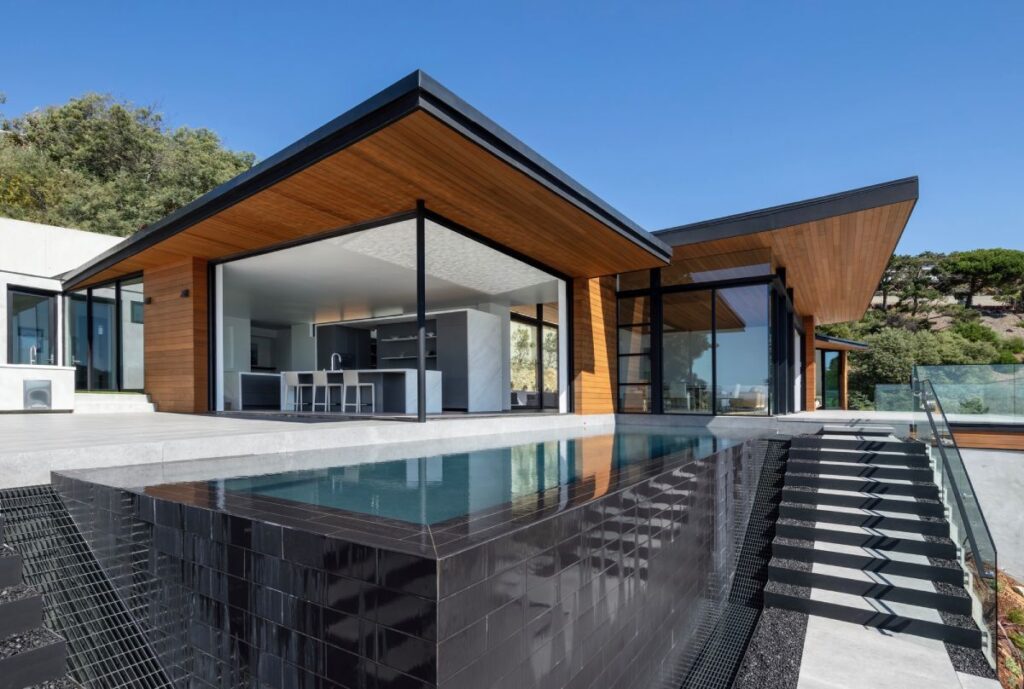
A good example of how this works as a hillside architect in Tiburon is a project I completed on a one-acre, undeveloped, upslope property with sweeping views at the top of the site – Tiburon Modern.
The property had been sitting on the market for some time. Multiple development teams had looked at it, but none could figure out a viable way to get cars and a home to the top of the hill.
A general contractor brought the site plan to me to see if we could solve it. We did. By taking advantage of right-of-way access, we designed a sweeping driveway approach with comfortable slopes and a fire truck turnaround area, all working with the existing terrain.
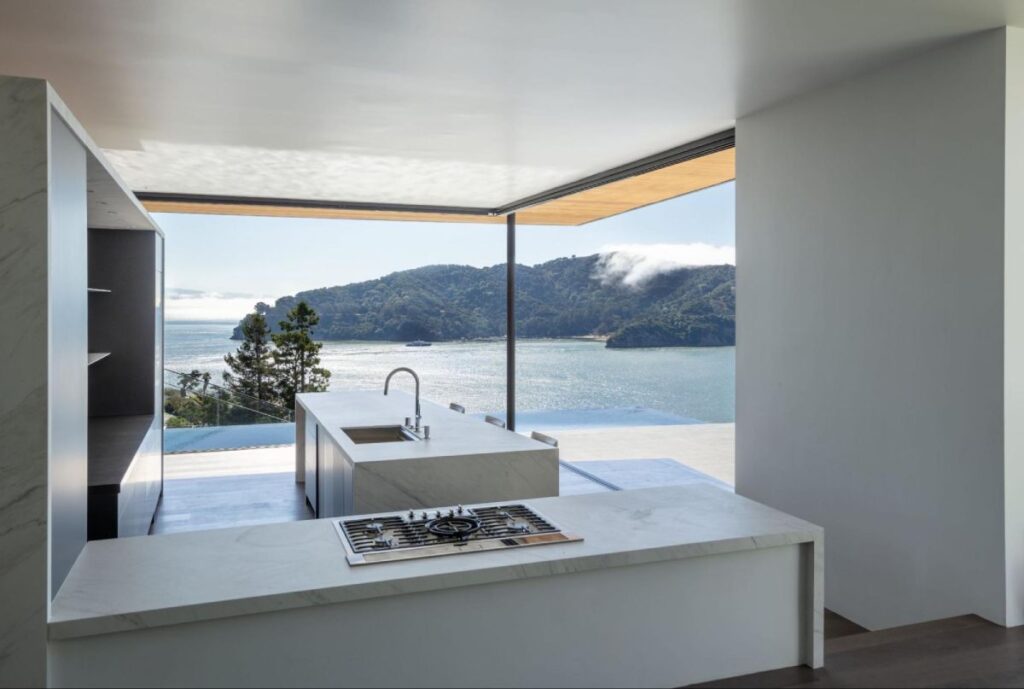
This allowed us to bring the garage up to the main living level behind the house, keeping the living spaces and primary suite on one floor with unobstructed views of both towers of the Golden Gate Bridge, downtown San Francisco, Angel Island, and the East Bay.
That was the golden nugget: a flatland house on a hillside. Garage, living area, and primary suite all on one level, with the kind of views that make Tiburon what it is.
When the Design Review Board Pushed Back
The initial response from the Design Review Board was interesting. They said, essentially, “We love this house, but it is a flatland home and does not belong on this hillside.”
That is not unusual. At first glance, the home looked different from what the guidelines seemed to suggest. But I knew the design was in keeping with the intent of those guidelines, and I knew it had no negative impact on neighbors.
Over the next several meetings, I carefully walked the Board through the logic of the design.
I showed how the home sat within the height limits, how the massing related to the terrain, and how the sightlines from neighboring properties were preserved. We did not fight the process. We prepared for it, and we presented a clear, complete story.
The result was a unanimous approval. The home was completed and sold for $11.8 million.
Riley Hurd, a land use attorney at Ragghianti Freitas LLP who has worked on hundreds of projects in Marin, described the experience of me navigating the permit process this way: “Scott has a detailed command of the nuances of the local zoning ordinances combined with a rather groundbreaking design aesthetic that still has a sense of place.”
Why Local Knowledge Changes the Outcome in Tiburon
There is a difference between understanding zoning codes in the abstract and understanding how they are applied in a specific town, by specific planning staff, with specific neighborhood dynamics. In Tiburon, that local knowledge changes the outcome.
I know which areas of town tend to generate more neighbor interest during review. I know how the Board has interpreted the design guidelines on recent projects. I know the construction logistics on streets where access is tight and staging is limited.
This is not information you get from reading the municipal code. It comes from spending decades working in this market.
In practice, this means my projects tend to move through the review process without the back-and-forth that extends timelines. When the plans are complete, when the story is clear, and when the concerns have been addressed before the hearing, the Board has what it needs to say yes.
What I Bring to a Tiburon Project
As a Tiburon residential architect and licensed builder, I approach every project from two directions.
- The first is the design and permitting side: reading the site, shaping the architecture around the zoning constraints and the views, and preparing the project for a smooth review.
- The second is the construction side: making sure every line I draw can actually be built, on this specific hillside, with the access and staging conditions that come with it.
My construction sets typically run 50 to 60 pages, compared to the industry average of 10 to 15. That level of detail matters in Tiburon, where sites are steep, logistics are tight, and the margin for coordination issues during the build is small. Contractors working from my plans know exactly what to expect. That keeps the project on schedule and reduces the kind of surprises that add cost.
I also work directly with my clients through every phase. There are no handoffs between a designer, a project manager, and a drafter. When you call, you are speaking with the person who drew your plans, met with the city, and understands the construction logic behind every detail.
For clients who value clarity and direct communication, that makes a noticeable difference.
Building in Tiburon: What the Market Looks Like
Tiburon continues to attract buyers and homeowners who value privacy, views, proximity to San Francisco, and access to strong local schools. Many of the homes here were built decades ago and do not reflect the way people live now.
Open floor plans, indoor-outdoor connections, level entries, and modern systems are all in demand, but achieving them on Tiburon’s hillside lots takes a specific kind of experience.
Whether the project is a full remodel, a ground-up build on a vacant parcel, or a strategic addition that changes how a home relates to its views and site, the same principles apply. Understand the terrain. Anticipate the review process. Draw plans that contractors can build from. And resolve the hard questions early, while there is still room to adjust.
That is how I have worked as a Marin County architect in Tiburon for over 25 years, and it is why my projects here tend to move forward without the delays that come when preparation is left until later.
Start a Conversation About Your Tiburon Property
If you are planning a project in Tiburon and want to understand what is possible on your site, I would be glad to talk it through. Schedule a consultation, and we can walk the property together, review the conditions, and figure out the right approach for what you are looking to do.
Schedule a consultation with Scott.
FAQs
1. How long does the design review process take in Tiburon?
Most Tiburon design reviews move through in two to four months when the submission is well prepared. As a Tiburon architect who has been through this process dozens of times, I find the timeline depends more on how complete the plans are than on the Board itself.
2. Can you build a modern home in Tiburon without running into design review issues?
Yes. The Tiburon design guidelines focus on how a home relates to its site and neighbors, not on architectural style. As a Tiburon residential architect, I have received unanimous approvals on clearly modern homes because the preparation was thorough and the design respected the intent of the guidelines.
3. What makes hillside lots in Tiburon more complicated than flat sites?
Steep grades, limited road access, view corridor restrictions, and tight construction staging. A hillside architect in Tiburon needs to resolve access and grading before the design even begins. When those questions are answered early, the rest of the process runs more smoothly.
4. Do I need an architect who knows Tiburon specifically, or will any Marin County architect work?
Tiburon has its own design review board, guidelines, and neighborhood dynamics. A Marin County architect with Tiburon experience will know how those guidelines have been applied recently and which areas of town generate more scrutiny. That local familiarity is a big part of why my projects move through review without extended back-and-forth.
5. What does one-level living mean on a Tiburon hillside, and why does it matter?
It means getting the garage, main living spaces, and primary suite all on the same floor. On a Tiburon hillside that takes careful site work, but it changes how the house feels day to day and adds significant value to the property.