What ministerial approval means
A lot of the reading out there on ministerial approval in California tends to leave people more tangled than when they started. Let me give you the short version, the way I would explain it at my kitchen table.
Ministerial approval means that when a project meets the objective standards already set out in the planning codes, the city must approve it. There is no judgment call about whether the design is attractive or whether the neighbors are happy about it. If the boxes are checked, the approval follows.
You will sometimes hear this called by-right, or as-of-right, which is the same idea in older language: the approval is a right the code grants you, not a decision a board makes about your taste.
That is the core idea behind ministerial approval in California, and everything below is detailed on how it plays out and where it applies. I have spent 25+ years running projects through the other kind of review, the discretionary kind, so I can tell you honestly how the two feel from the applicant’s chair.

How ministerial review works in California
Here is what the process feels like from where the applicant sits. You design the home of your choosing, then you put together a complete application: the drawings, calculations, and paperwork that show the project meets objective standards like setbacks, height, and floor area.
Once that application is complete, the ministerial review in California moves on a defined clock. The city checks the standards, runs the plans through a planning and zoning ordinance review, and issues the approval.
What is absent is the part that usually takes the most time and creates the most uncertainty. There is no planning staff to convince, no public hearing to schedule, and no design review board to persuade, and neighbor comments are not part of the path. In practice, this tends to compress a timeline that could otherwise stretch across months of meetings into something far more predictable and enjoyable.
Ministerial vs discretionary approval, side by side
The clearest way I have found to explain the difference is to put both processes next to each other. This is the ministerial vs discretionary approval comparison that matters for a homeowner
Read it as the difference between making a case and meeting a checklist.
Ministerial approval vs discretionary (design review): a side-by-side look
Ministerial Approval vs. Discretionary Design Review
How the two approval paths compare for a California home project.
| What you experience | Ministerial approval | Discretionary (design review) |
|---|---|---|
| Basis for the decision | Objective standards are met | Subjective judgment about design and neighborhood fit |
| Who decides | Homeowner & architect make the decisions; Planning staff just verifies they comply | A Planning Commission or Design Review Board with public input |
| Public hearing | None | Typically required |
| Neighbor notification and input | None | Typically part of the process |
| City input on color, material, massing, roof form, and view impact | None | Yes |
| Environmental (CEQA) review | Not triggered | Can be triggered |
| The approval standard | Must approve if the project is compliant | May approve, deny, or add conditions even if the project is compliant |
| Timeline | A defined decision window once the application is complete | Variable, and often much longer |
| Certainty of the outcome | High when the objective standards are met | Unpredictable, depends on the review |
| Where it typically applies in residential work | ADUs and SB 9 units | Most other homes and remodels |
| What the homeowner is really doing | Controlling the design & process | Making concessions |
Ministerial and discretionary are two separate approval tracks. Which one applies is set by the type of work and the property, and that shapes almost everything that follows.
What the table comes down to is this. Under discretionary review, you are usually making concessions to people who can approve, deny, or approve with changes your designed home under a narrow set of criteria. Under ministerial approval, as long as your design fits within a wide set of criteria, your project gets approved.
Both are legitimate paths, and for a good deal of custom home work, discretionary review may still be the right one. For an owner weighing a property as an investment, time and certainty are very important, and ministerial review gives a jump start on the financial return.
What design review actually weighs in on
Since ministerial approval takes design review off the table for qualifying projects, it is worth being clear about what design review actually does, because it is not arbitrary and exists for good reasons.
A design review board or planning commission looks at how a project sits in its setting. Over 25+ years I have taken numerous projects through that process, including ones where neighbors came to the meeting openly concerned about the proposed design. We have always publicly addressed any concerns and ultimately always received approvals.
What made the difference was groundwork done early. I would understand the likely objections before the meeting, photograph the sightlines from the neighboring properties, and walk calmly through the logic of the design before anyone had to raise a hand. In some cases, the design is tempered so the project can be approved through this rigorous public input process. This leads to quicker approvals and less arbitrary changes to the design.
When a project goes through design review, here is the kind of thing a board can weigh in on:
- How the massing reads from the street, meaning the size and shape of the building as a neighbor or passerby experiences it.
- The material and color choices on the exterior, which a board can ask you to adjust so the project sits comfortably in the character of the area.
- The roof form and height, which often draw the most attention on hillside lots, where a single roofline can sit inside another home’s view.
- The view impacts on neighboring properties, which in a place like Marin can be the single most discussed item in the entire review.
None of that is a bad thing. A good design review process can protect the character of a street. The point worth understanding is that it is discretionary, which means the outcome depends on judgment, and judgment takes preparation, time, and sometimes a compromise on the design itself.
ADU design review, and where it no longer applies
ADUs are the clearest example of a project that used to sit inside design review and now does not. Under state law, a qualifying ADU is approved ministerially, which means the ADU design review step that would once have applied simply is not part of the path anymore.
There is no board weighing the look of the unit, no neighbor notification, and no hearing. The state also gives ADUs their own set of objective standards, including 4-foot setbacks where standard zoning in Marin or SF might ask for 5 to 15 feet, and up to 800 square feet that does not count against the parent property’s floor area maximum.
I will leave the deeper ADU specifics to the article that covers them in full. The headline here is simply that the discretionary review step no longer applies to a qualifying unit.
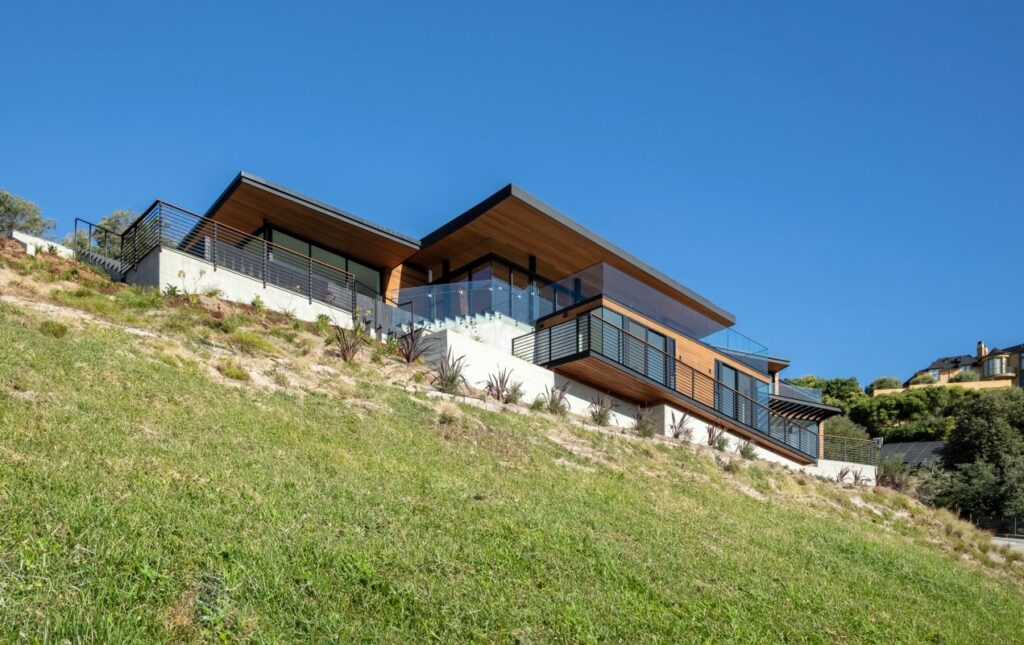
I have designed ADUs that started from exactly this kind of constraint. A home in Sausalito’s ADU began as existing floor space within the house. We converted the space to an ADU by adding a small kitchenette; this freed up available floor area for a small addition to the primary suite. This was all done ministerially. Had we not proposed the ADU, we would have had a tough time going through a discretionary review with a floor area variance. Probability of a successful approval was low.
SB 9 ministerial approval and the whole-property question
SB 9 is the second common path into ministerial approval for a residential property. The bill mechanics, the lot splits and the two-unit properties, are covered in depth in the article on SB 9 and SB 450, so I will not re-teach them here. What matters for this discussion is the review process. An SB 9 project is handled ministerially, the same way an ADU is.
The framework is new, and as more applications move through cities, the way this settles may keep shifting. There is a lot of complexity to SB 9 and this generates a lot of great opportunities when applied to different properties. The key is understanding the language of SB 9 and applying creativity to how you apply it to properties.
What ministerial approval still requires
It would be easy to picture ministerial approval as a green light with no rules attached. That is not how it works. Ministerial approval removes the discretionary judgment, the part where a board decides whether it likes your project. The code still applies in full.
A ministerial project still has to satisfy real requirements:
- Building code compliance, the same structural, fire, and life-safety rules that every home in California has to meet.
- The objective zoning standards that apply to the project, such as the specific setbacks and height limits written for that pathway, except for the exceptions specifically written into SB 9
Where the ministerial path applies for a Marin or SF home
For a single-family homeowner in Marin or San Francisco, there are really 2 common doors into the California housing ministerial pathway, and both point to a fuller treatment elsewhere in this series.
- An ADU, which is approved ministerially under state law and is the one most homeowners already know. The deeper article on ADU design in Marin covers the setbacks, the floor area, and the day-to-day uses that make an ADU worth building.
- An SB 9 project, meaning a lot split or a second unit in a single-family zone. The article on SB 9 and SB 450 covers how those pathways are structured and how the law arrived here.
Those are the residential situations where the California housing ministerial route tends to come up in my work. Whether either one fits a specific property depends on the property, which is where a careful look at the lot and zoning comes in.
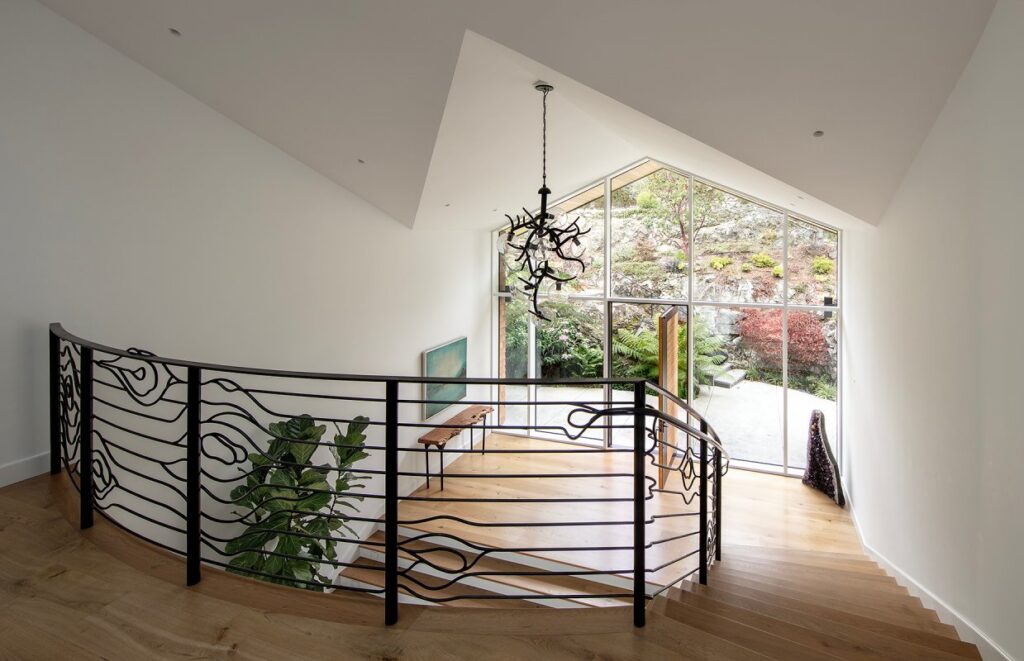
No design review does not mean no design
Here is the part I most want a design-minded homeowner to take away. When a project runs ministerially, there is no design review California requires on these projects, which means the city has no say over the color, the materials, or the way the building sits on the land.
That sounds like freedom, and it is. The design of your project, as long as it meets the wide criteria, is now in your hands without tempering or compromising the design to suit neighbors or city officials. For those who have gone through a design review process, this is liberating. You can now focus more on design quality, your personal taste, and your own desires for your home.
Talk through your property
If ministerial approval in California is something you have been reading about for your own property, I am happy to walk through whether it actually applies and what the path would look like.
A great deal of this comes down to the specific lot and zoning, and that is worth talking through before you commit to a direction.
Schedule a consultation with Studio Couture, and we can look at your property together and sort out which of the 2 paths, ministerial or design review, your project is likely to fall under.
Frequently asked questions
What does ministerial approval in California actually mean in plain terms?
It means that when a project meets the objective standards written into the code, the city has to approve it, with no discretionary judgment about the design and no hearing. You will sometimes see it called by-right approval. The rules still apply in full, and what is removed is the part where a board decides whether it likes what you have proposed.
Does ministerial approval mean my project skips design review entirely?
Only for qualifying projects, mainly ADUs and SB 9 units. Most other custom home and remodel work still goes through design review, and for a good many of those projects that is the right path. Whether your project qualifies for the ministerial route depends on the specifics of the property.
How is a ministerial timeline different from a discretionary one?
A ministerial project moves on a defined decision window once the application is complete, so the process is far more predictable. A discretionary project depends on hearings, board schedules, and the back-and-forth of review, which is variable and often longer. I will not promise a specific number of days for any given city, but the difference in predictability is real.
Do I still need an architect if the approval is ministerial?
Absolutely, without the discretionary review process, the design options are so much more open to tailor specifically for homeowners.