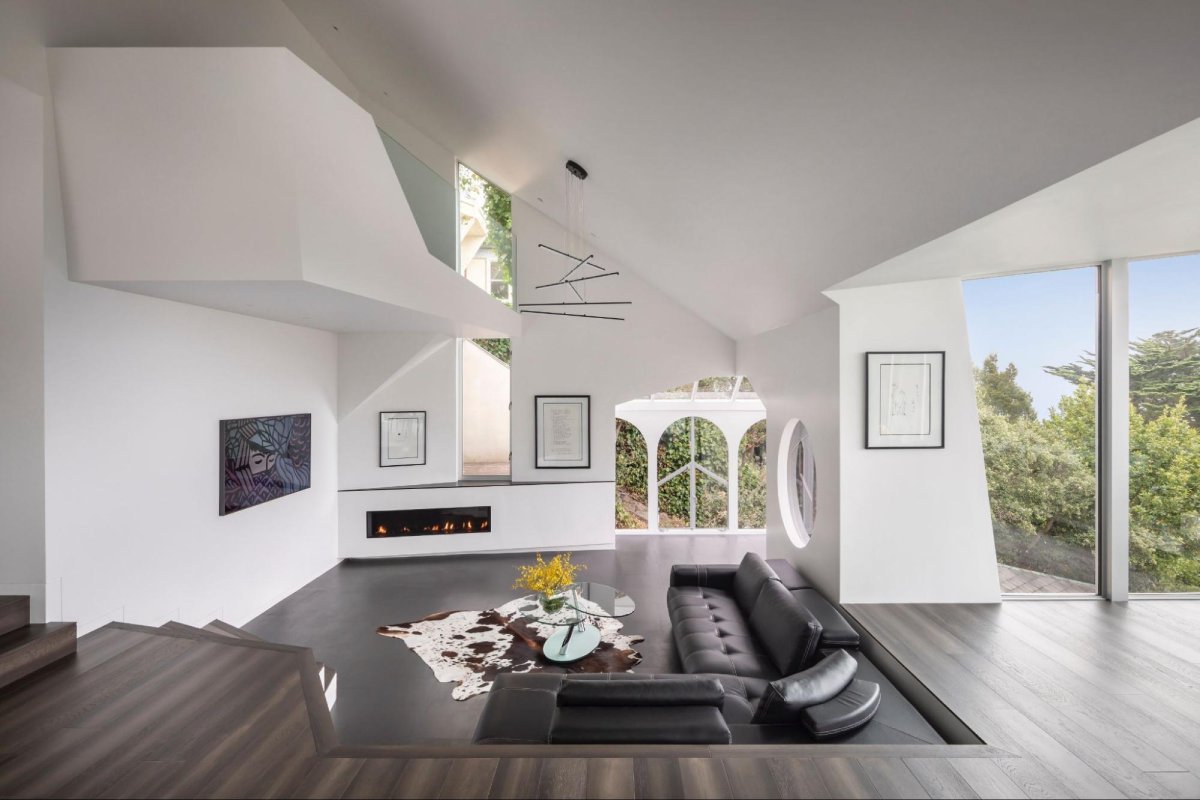
Many of the clients I meet for the first time are accomplished professionals who have built their careers running expert teams.
They are used to a world where more people generally means more capacity. So a reasonable question comes up early: can a principal architect carry a project of this size and complexity, from first sketches to construction?
It is a fair question, and I want to answer it the way I would across a table, by describing what working directly with the architect in San Francisco and Marin actually looks like in daily practice.
Studio Couture is a principal-led architecture and design build studio in Sausalito. The person you meet at the first site walk is the same one who designs your home, produces the construction documents, walks the site each week, and is on the phone when a field question comes up.
That continuity is the whole point of the model.
What “principal-led” means in daily practice
What I’ve seen over time is that the small decisions of a project are where its character gets made or lost.
The roof line we shape together in a 3D model in month two is the same roof line I am reading on a Tuesday morning when the framers set the top plates. The window head heights we land on while talking about how light moves through your living room are the same dimensions I check when the rough openings get framed.
I work as a principal architect, and I also have experience as a licensed contractor, metal fabricator, and woodworker. That second half of my background changes how the first half operates. When I draw a steel stair detail, I have welded steel.
When I draw a complicated framing condition, I have framed similar conditions on other sites. Working as an architect with builder experience in San Francisco shapes every line of a permit set, because the same hands have done both.
That is what allows the design to stay coherent over the 18 to 30 months a project usually takes. The person who knows why a particular ceiling height was chosen is the same person walking the slab pour the morning the concrete trucks arrive.
How decisions move when you work directly with the architect
In practice, this tends to mean that the speed of a project lives in how quickly the small decisions get resolved. A framer hits an unexpected condition. A subcontractor needs a clarification on a window header. In a larger administrative structure, those questions travel up a chain and back down. In the way I work, the question reaches me directly, usually within the hour.
A typical field decision looks like this. The contractor sends a photo. I sketch over it on my tablet, sign it, and send it back. Five minutes, sometimes ten. The work keeps moving. That kind of responsiveness is included in the standard fee, not priced as a separate construction administration line.
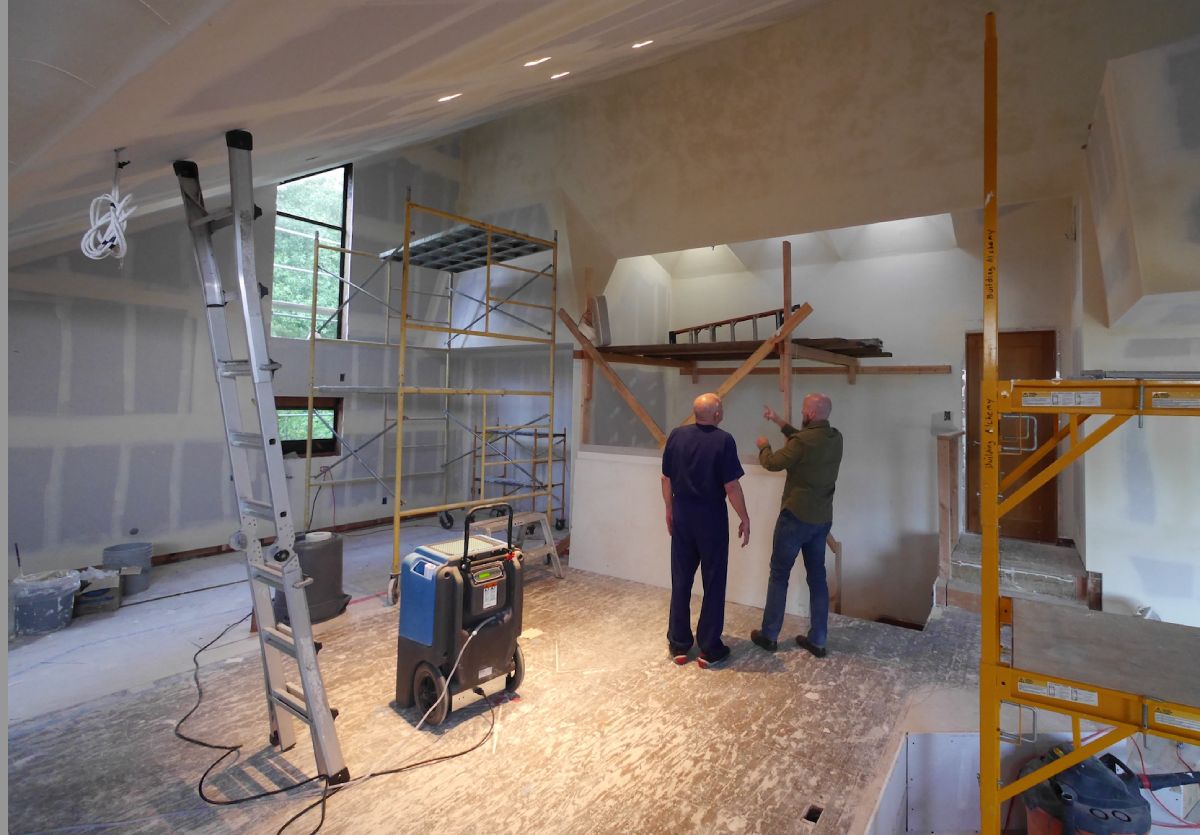
Site presence is the other half of this. I am on site about once a week on every active project, and often more than that when a phase calls for it. I am there reading framing geometry, foundation corners, formwork, and rough openings before the finish goes in.
Modern architecture is finicky. Almost nothing gets covered up, which means the trade two or three steps before the finish has to be right. A fix is never as clean as getting it right the first time.
On hillside lots, I also walk the site alone on weekends, usually looking at view corridors. As the framing goes up, you can stand in what will become the primary suite and see exactly where the window should land. I bring clients on site during foundation and framing for the same reason, so the home can keep refining itself as it reveals itself.
Between site visits, I am available by phone, Zoom, FaceTime, and through photo and video review.
Why I chose this model
I did not start here. For years, I ran an architecture firm and a construction company together, with 10 to 15 people across both, and I have respect for the firms that operate at that scale and do it well. Through the 2008 to 2012 recession, I looked closely at where the value in the work was actually being created, and I came to a conclusion that reshaped how I practice.
The conclusion was that the administrative load of running a larger group was affecting the quality of the work I most cared about. Downsizing was a refinement of where my time goes. Now my time goes into design, drawings, and site work.
In my experience, the cleanest projects are the ones where decisions are resolved early and where one set of eyes carries them all the way through. That is what a principal lead architect firm in SF looks like when the model is designed for it from the start.
Running 8 to 10 projects at once
A natural question follows. If one person is doing all of it, how many projects can run at the same time? In practice, I usually have 8 to 10 active projects at any moment, across design, permitting, construction coordination, and client communication.
That is possible because the work that consumes time in a larger structure, the handoffs and the reinterpretation across desks, is the work I have systematically removed from my own days.
I work directly inside the production drawings. Schematic ideas develop in the same 3D model that becomes the permit set and then the construction set. When I sketch a change on a Tuesday afternoon, it is already inside the buildable model.
That is also why my construction sets typically run 80 to 120 pages, with some current projects approaching 135.
That level of detail is standard among full-service high-end residential architects in this region. Shorter sets exist in the market and do what they are built to do, which is get a building permit. With a 100-plus page set, the contractor has the drawings they need to build the home the way it was designed.
What the contractors say
Around here, the contractors I work with regularly have a lot to do with how smoothly a project actually goes. Timothy Vinson of Building Alchemy has built more Couture homes than anyone, going back to 2004. The reason that the relationship works is that the drawings show up on his sites with the construction logic built in, and when a question comes up, he has me on the phone the same day.
Brian Stang at Summit Technologies, who has been on our recent Sausalito projects, has described the work in a way I think captures the principal-led idea well. He has said the architect is always thinking about what is best for the client and genuinely cares about the finished product. That is what I am trying to do every day.
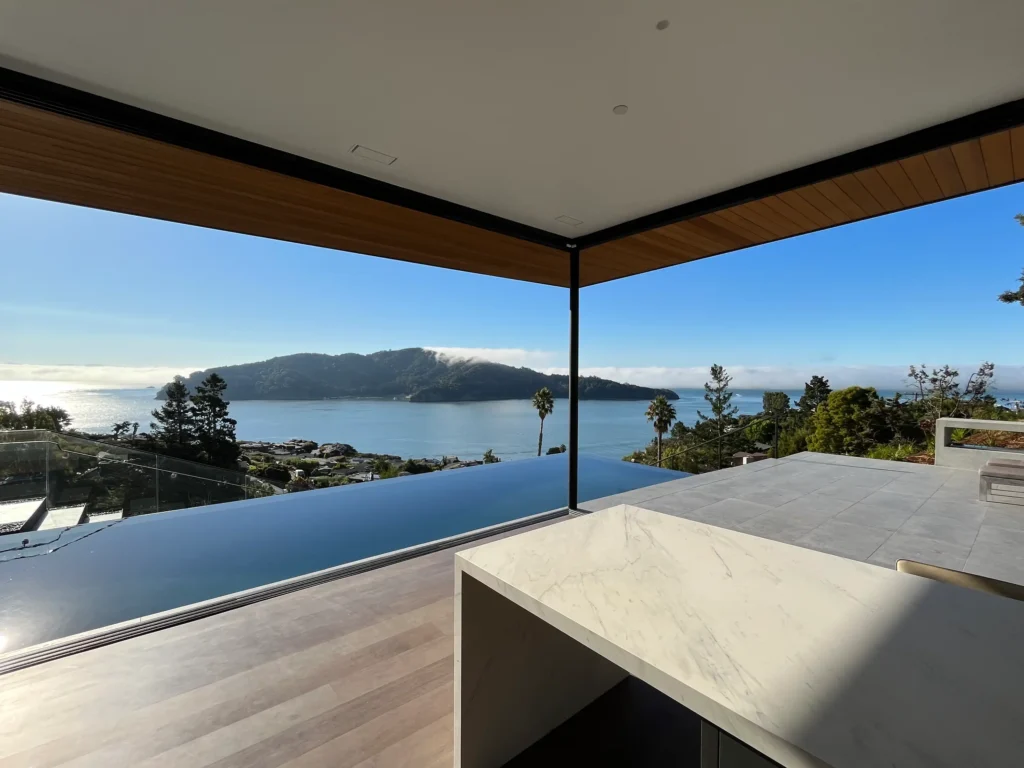
The Tiburon Modern project is a useful illustration. It was a steep, undeveloped acre at the top of a hillside that several development teams had passed on because they could not get cars and a home to the top of the site. We worked through the driveway approach, designed the home around it, and brought it through a design review board that initially said the home felt like a flatland house set on the hillside – precisely what my client wanted
Over a few meetings, we walked them through the design and prevailed with a unanimous approval. The home sold for $11.8 million. That whole project ran through one set of hands.
A calm next step
If you are weighing how to structure your next project and want to understand what a principal architect actually does on a job like yours, I am happy to walk you through.
Schedule a consultation with Studio Couture, and we can look at your site, your goals, and how the work would flow.
Frequently Asked Questions
What does “principal-led” mean in architecture?
Principal-led means the principal architect personally carries the project from first sketch through construction, rather than handing it down a chain. At Studio Couture, I am the person you meet, the one designing your home, producing the drawings, and on site each week.
Can a principal architect handle a large or complex project alone?
In practice, yes, and the reason is structural. I work directly inside the production drawings rather than translating across desks, so the handoffs that a larger structure carries are not part of my own day. I usually run 8 to 10 active projects at once, including complex hillside builds and full custom homes.
How does working directly with the architect in San Francisco affect a project timeline?
The biggest effect is on field decisions, where a typical question gets answered in minutes rather than days. Design coherence also benefits, because the person making the call in the field is the same person who made the call at the desk.
What happens if the principal architect is unavailable during a busy period?
I plan project phasing so that intensive phases on different projects do not stack on top of each other. I am also available by phone, Zoom, FaceTime, and photo review between site visits, which means most field questions reach me the same day.