
Where Most Remodels Actually Go Wrong
A pattern I see again and again starts the same way. A client falls in love with a product early on. Sometimes it is a window system, sometimes a cladding material, sometimes a custom fixture or finish. At that moment, it feels like progress is made. One decision is out of the way.
Months later, coordination challenges often surface.
The installation requirements conflict with the existing structure. The city flags the material late in review. The product turns out to be discontinued or backordered. Or the contractor cannot source it in time and substitutes something else in the field.
None of these issues is dramatic on its own. What matters most is when they’re addressed. By the time they are discovered, the drawings are already submitted or construction has already started.
When that happens, the project often needs to adjust in a few predictable ways:
- Drawings need to be revised after permit submission
- Contractors are forced to improvise solutions on site
- Construction sequencing breaks down
- Budgets creep upward in small but steady increments
This is often thought of as a construction issue, but it usually traces back to material sourcing decisions.
Why Material Sourcing Is Not About Selecting Finishes
Most homeowners think material sourcing means selecting finishes. That assumption makes sense. Finishes are tangible, and reacting to them is intuitive. They feel like design.
From my perspective, material sourcing is something very different. It is the coordination of decisions that directly affect whether a project can be permitted, built, and executed as intended.
What Material Sourcing Actually Includes
When I talk about material sourcing, I am talking about the coordination of:
- Installation requirements and tolerances
- Code and zoning compliance
- Interaction with structure and building systems
- Availability and realistic lead times
- Whether substitutions are viable without redesign
- Bringing vendors into the design and construction drawing process
Each one of these factors influences the drawings long before a contractor steps on site. When they are understood early, the plans become clearer and more reliable with each decision.
A material that looks straightforward on paper may require deeper framing, different waterproofing, or alternate fastening methods. A product that works well in a showroom may not perform the same way on a steep hillside lot with limited access. These are not aesthetic concerns. They’re practical construction considerations.

Lead Times, Availability, and the Reality of the Supply Chain
When material decisions are delayed or made without verification, it affects more than just scheduling. It affects how drawings are developed and how permits are reviewed. If a key material is unknown or assumed, the permit set carries that uncertainty forward.
That uncertainty eventually has to be resolved, often later than anyone would prefer.
Why Late Changes Create Compounding Problems
Late material changes rarely stay isolated. A single substitution can trigger a chain reaction:
- Details need to be redrawn to accommodate new dimensions or fastening methods
- Permit reviewers ask for clarification or resubmittals
- Contractors pause work while solutions are re-coordinated
What started as a simple change ends up touching multiple systems. This is why I treat early material decisions as part of the planning phase, where they can support everything that follows.
The Direct Connection Between Materials and Permits
Permits are about demonstrating that a building can be constructed safely, clearly, and in compliance with local requirements. Materials are a critical part of that demonstration.
When materials are understood early, drawings stay accurate and aligned. When drawings lose accuracy, permit review slows down.
How Cities Review Materials
Cities review materials through a practical lens. They are looking at how materials perform and how they affect the surrounding environment. That includes considerations such as fire resistance, visibility, structural behavior, and environmental impact.
They are not interested in brand names, but rather if the material does what the drawings claim it will do.
When a material is clearly specified and coordinated, it helps avoid unnecessary revisions.
Why Accurate Material Decisions Reduce City Corrections
When materials are selected and coordinated early, the permit set becomes clearer and more defensible:
- Permit drawings answer questions before they are asked
- Reviewers spend less time flagging assumptions
- The approval process moves forward with fewer interruptions
Construction Realities Most Designers Do Not Account For
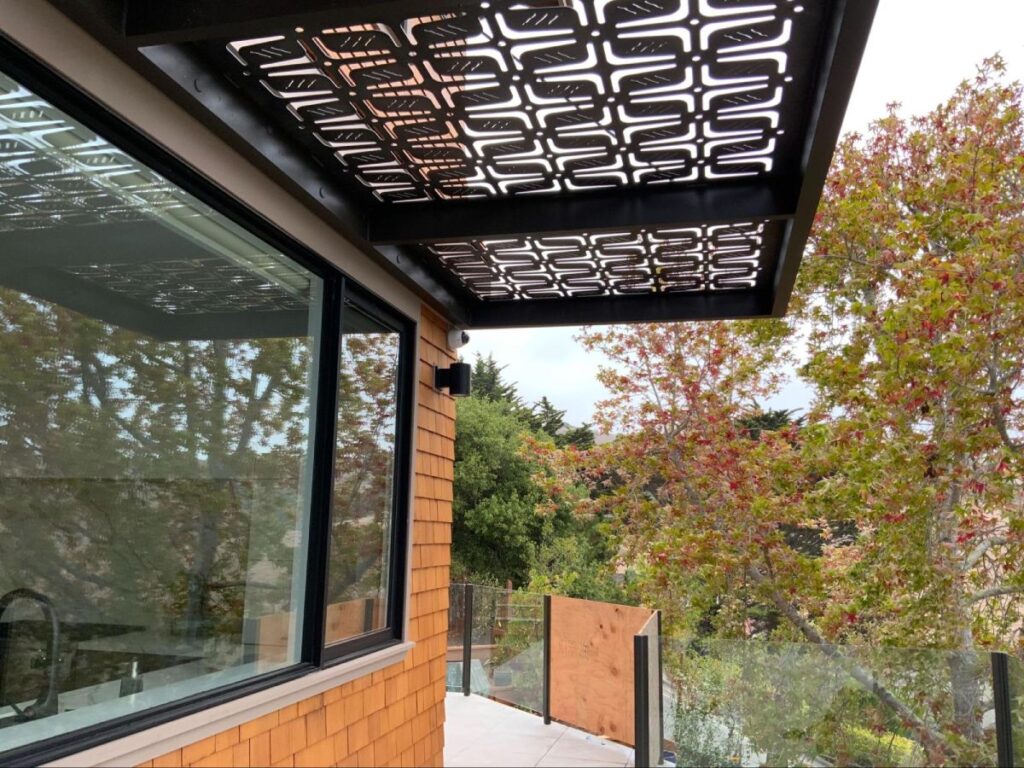
Materials behave differently in the field than they do in concept drawings. Hillside conditions, tight access, older structures, and sequencing constraints all influence how materials can actually be installed.
Installation Matters More Than Specification
Installation affects labor sequencing, tolerances, waterproofing, and coordination between trades. A material that requires perfect conditions may not be appropriate for a site where access is limited and staging is tight.
This is where a builder’s perspective adds real value. When materials are chosen with installation in mind, the project moves with fewer questions and fewer surprises.
How I Approach Material Sourcing
I do not treat material sourcing as a separate phase or a shopping exercise. It is integrated into how I design and document a project, following a set of principles:
- Selections are informed by how materials are actually installed
- Availability and lead times are verified early
- Backup options are identified before construction begins
- Materials are embedded in detailed construction documents
This approach allows the project to go through all the phases fast and build without construction delays and budget creeps. This also allows all the materials to work together and integrate into the overall design.
When materials are understood early, the entire project benefits. The drawings communicate clearly. The permit process moves more smoothly. Construction sequencing becomes predictable.
This is where material sourcing moves from a design conversation into a planning strategy.
Fewer change orders occur because fewer surprises are introduced. Contractors ask fewer questions because the details are resolved. The project spends more time being built and less time being reworked.
Material sourcing is one of the quiet factors that determines whether a project feels controlled or chaotic. When it’s treated casually, coordination becomes harder later in the process. When it is treated as part of the architectural process, it supports everything that follows.
If you are planning a remodel or rebuild and want to understand how material sourcing should be handled, it is worth addressing early, before decisions become harder to adjust later on.