Most of my clients see their first stack of architect construction drawings San Francisco builders work from and tell me they have no idea what they are looking at. That is fair.
A construction set is dense, and for a homeowner who has never built before, the pages can feel like a language no one taught them. And these days, the stack is increasingly a tablet.
What I’ve seen over time is that the drawings shape almost everything that follows. They are what the city reads to issue a permit, and they are what the contractor reads to build the home. The detail in those pages quietly decides how the approval moves, how the build runs, and how often you get a call from the field.
I’ll walk through what a complete set contains, what changes when the drawings live as a 3D model, and what all of that means for your project.

What a Construction Drawing Set Is
A drawing set is a single document, usually delivered as a multi-page PDF, that describes a home from every angle a builder and a city official need to see it. Architectural sheets carry the plans, elevations, and sections.
Structural sheets describe how the home holds itself up. Site and grading sheets describe how it sits on the land. Mechanical, electrical, and plumbing sheets describe the systems running through the walls. Finish schedules, door and window schedules, and detail callouts describe how the surfaces meet and what they are made of.
For most homes in this market, and really for any architect construction drawings San Francisco projects produce, those categories carry across dozens of sheets. The architectural drawings homeowners eventually hand to a contractor are essentially a complete description of the home, drawn before anyone has cut a single piece of wood.
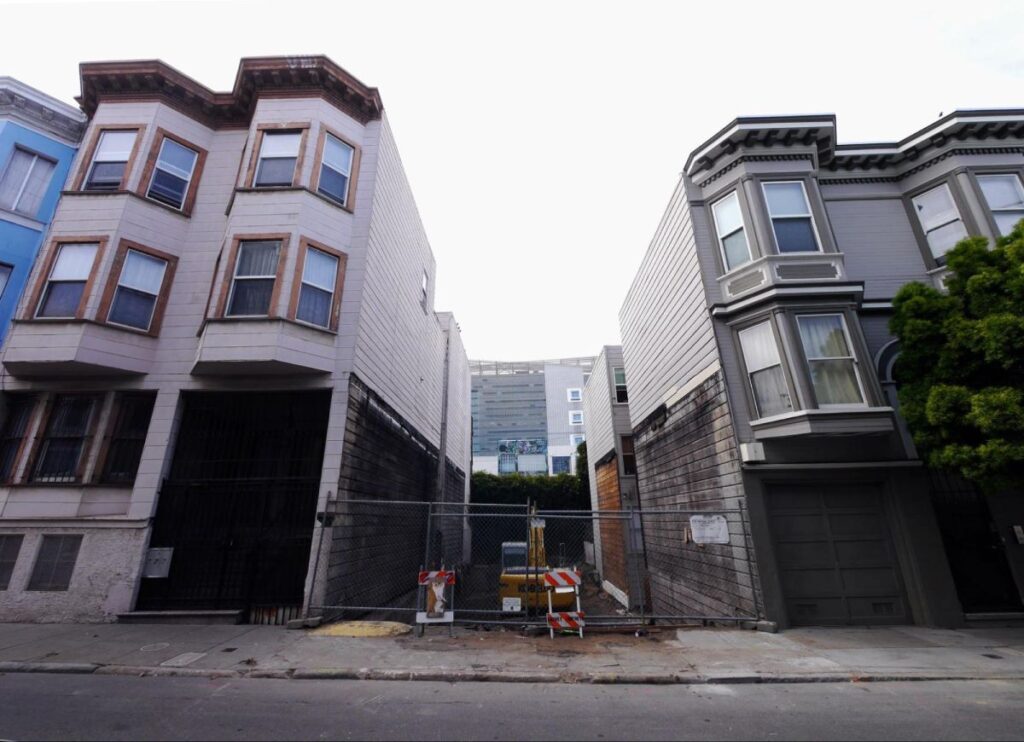
Architectural drawings San Francisco builders rely on tend to be denser than people expect, because the homes themselves are denser. Sites are tight, codes are layered, and the details have to be there.
How the Drawings Live as a 3D Model
For a long time, a construction set was a stack of printed sheets or a PDF. Any update meant a new revision distributed by email. Over the last few years, that model has given way to something different.
The drawings I produce now live in a program called BIMx, viewed on an iPad. BIMx pulls from a cloud-based file built in ArchiCAD, which sits on my desk. When I update a detail, the contractor sees the change on his iPad the next time he opens the project. There is no more outdated set of plans sitting in someone’s truck.
The document is also 3D. A contractor can zoom in on a steel beam, tap it, and pull up its size, weight, and connection details. The same applies to windows, light fixtures, door hardware, and structural framing. Information is tagged into each element, so when a subcontractor on site asks whether a fixture needs a junction box or what voltage it runs on, the spec is one tap away.
Tech-oriented clients take to this quickly, and the last two general contractors I have worked with both went out and bought iPads specifically to use BIMx on the job site.
On the Lamborghini Living remodel in Sausalito, we were standing on site with the client when she asked the contractor a question. He started flipping through his paper set. I pulled up the same sheet on my iPad in about four seconds. He said, calmly, that he was going to buy an iPad the next day. He did.
What Makes a Set Permit-Ready in San Francisco and Marin
Permit-ready is a threshold the city sets, not the architect. A set is permit-ready when it answers the questions the planning and building departments will ask. In San Francisco and Marin, those questions involve zoning, setbacks, height limits, daylight planes, fire access, structural calculations, neighbor notifications, and design review where it applies.
What goes to the city is a PDF. The reviewers do not need the 3D model, and we do not send them one. The permit set is scoped to what the city has to see in order to approve the project. The construction set, which the contractor builds from, is the broader document, with the BIMx model alongside it.
Getting a permit and getting a clean build are different goals. A shorter set obtains the permit, which is what it is built to do. The trade-off is that questions about how the home actually goes together get answered in the field, by the contractor, in real time. A more developed set of drawings answers those questions before the build itself starts.
Both approaches obtain permits, but they produce different experiences once construction starts. Most of my permit-ready drawings sit on the more developed end.
What Goes Into a Studio Couture Construction Set
My sets typically run 80 to 120 pages on the PDF side. A project I am working on right now is at 135. The page count is a function of how the home is designed and how much custom fabrication is involved, not a metric I chase for its own sake.
What those pages and the underlying model contain is the level of resolution that takes the home from concept to constructible object: full structural coordination, drainage and waterproofing details, millwork drawn to finish level, shop drawings for custom fabrication when a piece is being made specifically for the home, door and window schedules with hardware and operation called out, lighting and electrical with switching logic, mechanical routing, and the detail callouts that resolve how one material meets another, because that is where most field questions live.
A piece of why my construction documents clients value comes from my background. I am a licensed architect and a licensed contractor. I have fabricated in metal and built in wood. When I draw a steel detail, I am drawing something I know how to weld. The sculptural steel kitchen island in the Lamborghini Living remodel, shaped with Wyatt Studios from full-size photos of the owners’ cars taped onto a shop wall, is one example of how that background carries through to a finished detail.
This is where the design and the drawings move as one process, which is the territory my Custom Home Design work lives in.
Why the Drawings Matter for Approval
Cities respond best to complete information. In my experience, when a set of architect construction drawings San Francisco reviewers receive already answers the likely questions, the approval moves more smoothly.
I have a 100% approval record across 25+ years in San Francisco and Marin. The pattern behind it is that the strategy and the drawings stay aligned from the start, which means the city sees a complete story when the set arrives at the counter.
Why the Drawings Matter for the Build
This is where the buildable plans get practical. When the drawings have already resolved a question, the contractor builds from the answer. When they haven’t, that question becomes a field decision, a phone call, a change order, or all three.
Erick Juarez at MCL Construction has been a general contractor on Studio Couture projects. He has told me that the attention to detail in the drawings, and the ability to pull the model up on his iPad on site, make complex custom work easier to coordinate. What I am after is detail that lets the people building the home spend their time building it instead of decoding it. That is what buildable plans architect work means in practice.
I am also on site once a week, often more, not at milestones. I read the construction setup before finish work goes in, because I have already built the home inside the 3D model and know what the foundation, the framing, and the rough trades have to look like.
A fix is never as clean as getting it right the first time. The drawings and the on-site presence work together throughout the build, which is the territory my Construction Oversight in San Francisco covers in more depth.
A Project That Shows How the Drawings Carry
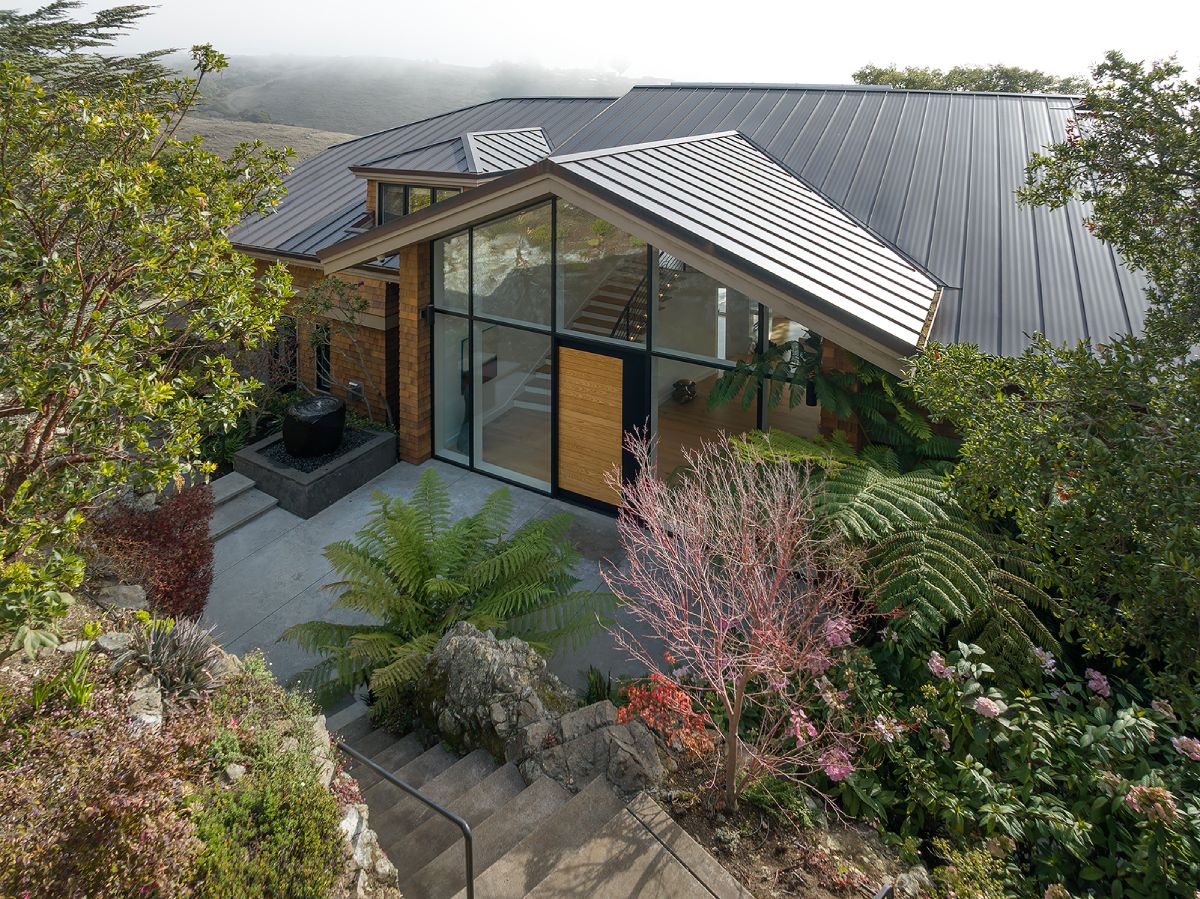
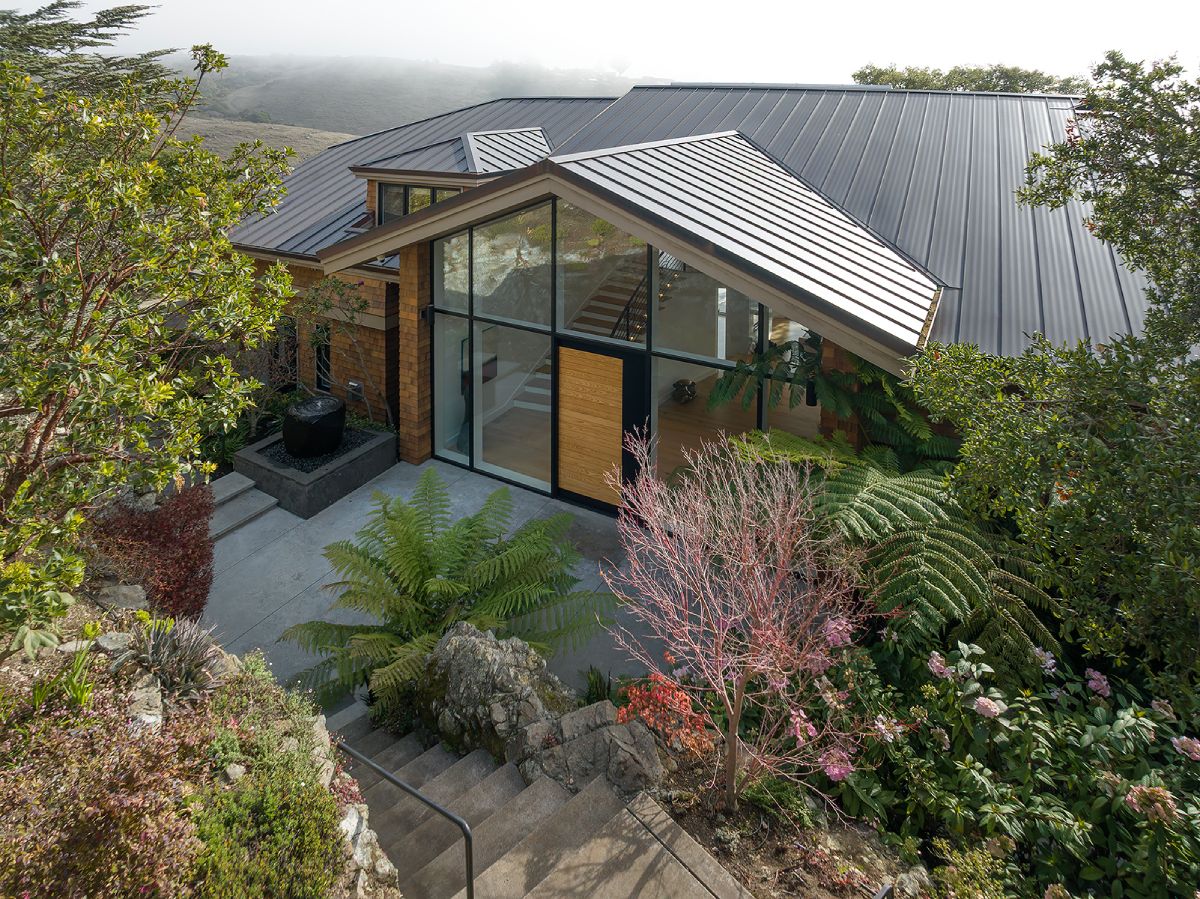
Tiburon Modern is a useful example. It is a ground-up hillside home on a one-acre upslope parcel that other development teams had passed on because they could not find a way to get a car to the top of the site.
We solved the driveway by working with a sweeping approach across the existing terrain, designed the home around the views, presented it to the Design Review Board, and walked out with a unanimous approval. The construction set then carried the project through the build cleanly enough that it sold for $11.8 million.
The drawings were not the only reason that worked. But the build would have looked different without their thorough set.
Ready to Talk It Through?
If you are planning a new home or a substantial remodel in San Francisco or Marin and you want to understand what architect construction drawings can look like for your specific project, I am happy to walk through it.
Schedule a consultation with Studio Couture.
Frequently Asked Questions
What is the difference between permit drawings and construction drawings?
Permit drawings are the version of the set the city reviews to issue a permit, delivered as a PDF. Construction drawings are the version a contractor builds from. On many of my projects, the same set carries both roles, with the construction drawings also available as a 3D model on an iPad.
Will I see paper plans or digital plans?
You will see both. The permit set delivered to the city is a PDF; you and your contractor also have access to a 3D model on an iPad through a program called BIMx, which updates in real time from my desk. The version you are looking at is always current.
How many pages should a construction set be?
There is no fixed answer. When people ask how thick a complete set should be, the answer depends on the project; my typical set runs 80 to 120 pages, with a current project at 135. A “50 page construction set” might fit a simple home, while page counts on architect construction drawings San Francisco builders use for complex work go higher.
How long does it take to produce a complete set for a San Francisco home?
For a full custom home or substantial remodel, the drawing phase usually takes several months. The schedule depends on design complexity, the site, and the level of custom fabrication. Architect construction drawings San Francisco builders use take longer to produce than first-time clients often expect, because codes and design review add time.
Can a contractor build from any architect’s drawings, or do drawings need to match a specific builder?
A good set is buildable by any qualified contractor. That said, contractors do read sets differently, and a builder who has worked with a given architect before tends to move through the documents faster, both the PDF set and the 3D model. Timothy Vinson at Building Alchemy has built more of my homes than anyone, and his familiarity with how I draw means we lose very little to interpretation.